
Who Is Prophet Muhammad (P.B.U.H)?
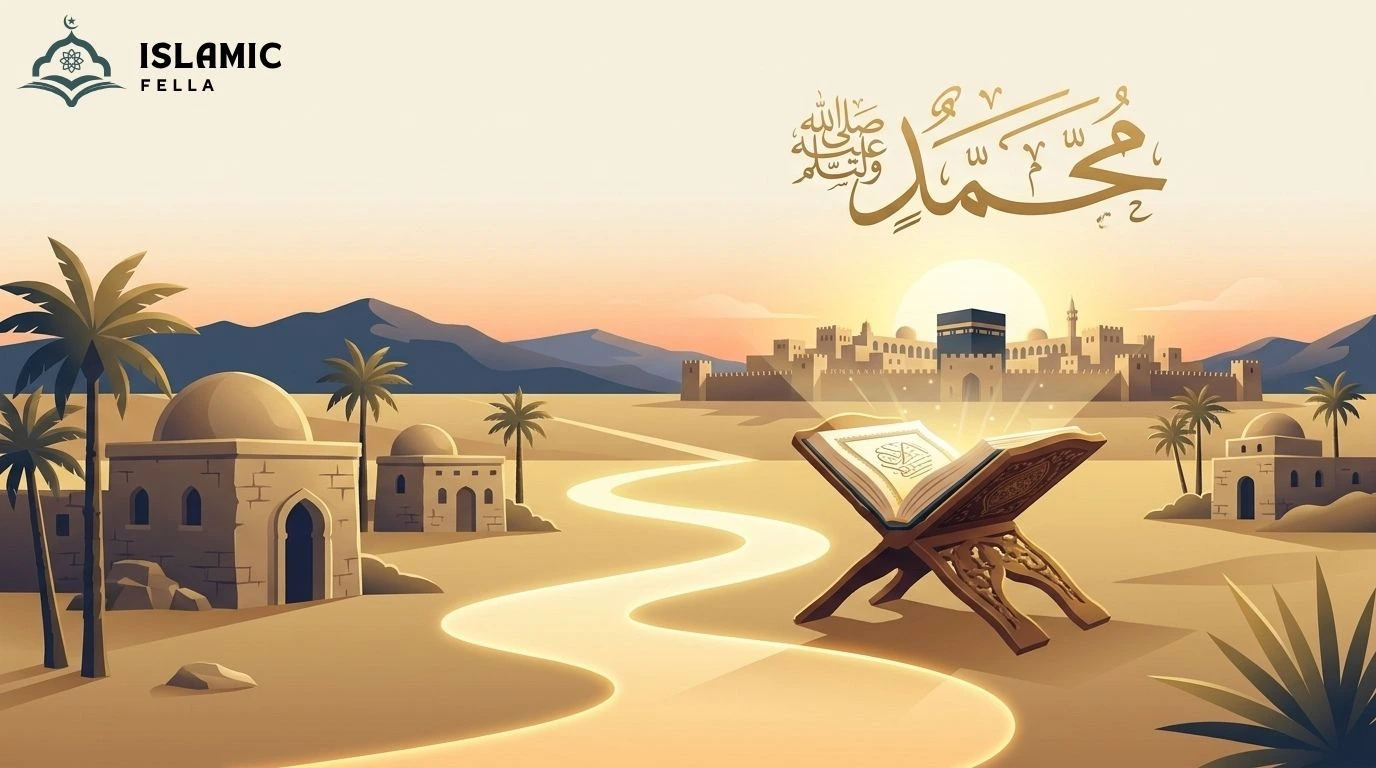
Prophet Muhammad (P.B.U.H) is the final prophet and messenger of Allah in Islam. Muslims believe he was sent to call people back to the same basic message taught by earlier prophets: worship the one true God and live a righteous life. He is loved deeply by Muslims, but he is not worshipped. Worship belongs to Allah alone.
The Qur’an calls Muhammad (P.B.U.H) the Messenger of Allah and the final prophet. Muslims also believe his life gives a practical example of how to live by the Qur’an. His words, actions, and approved practices are known as the Sunnah.
His Birth and Early Life in Makkah
Muhammad ibn Abdullah was born in Makkah around 570 CE into the Quraysh tribe. His father, Abdullah, died before he was born, and his mother, Aminah, died when he was still a child. He was then cared for by family members, including his grandfather Abd al-Muttalib and later his uncle Abu Talib.
As a young man, Muhammad (P.B.U.H) worked and took part in trade. Islamic biographical tradition remembers him for honesty and trustworthiness. He later married Khadijah bint Khuwaylid, a respected businesswoman. Khadijah became his closest supporter and, according to Islamic tradition, the first person to believe in his prophethood.
The First Revelation
Muhammad (P.B.U.H) often spent time away from the noise of Makkah in the Cave of Hira. Around the year 610 CE, when he was about forty years old, he received the first revelation through the Angel Jibril, or Gabriel. The opening command was connected with reading or reciting in the name of the Creator.
This event began his mission as a prophet. Revelation continued over about twenty-three years. These revelations became the Qur’an. The early message called people to worship Allah alone, reject idols, care for the weak, be honest, give charity, and remember that every person will answer to Allah on the Day of Judgment.
Years of Opposition in Makkah
The message challenged many beliefs and social habits in Makkah. Some people accepted Islam, while many leaders strongly opposed the Prophet (P.B.U.H) and his followers. Early Muslims faced pressure, abuse, and persecution. Some migrated to Abyssinia for safety, where they were given protection by a Christian ruler according to early Islamic history.
The Prophet (P.B.U.H) continued preaching despite rejection. He also suffered personal loss. His wife Khadijah and his uncle Abu Talib died during the Makkan period. Yet he continued to call people to faith, patience, justice, and worship of Allah.
The Hijrah: A Turning Point in Islamic History
In 622 CE, the Prophet (P.B.U.H) migrated from Makkah to Yathrib, the city later known as Madinah. This journey is called the Hijrah. It was such an important turning point that the Muslim calendar later began from the year of the Hijrah.
In Madinah, the Muslim community was able to live more openly. The Prophet (P.B.U.H) served not only as a religious teacher but also as a community leader. Mosques, social bonds, charity, agreements, and community responsibilities became important parts of Muslim life. The Madinah period also included armed conflicts with opponents, treaties, and changing relations with tribes and communities around Arabia.
The Return to Makkah
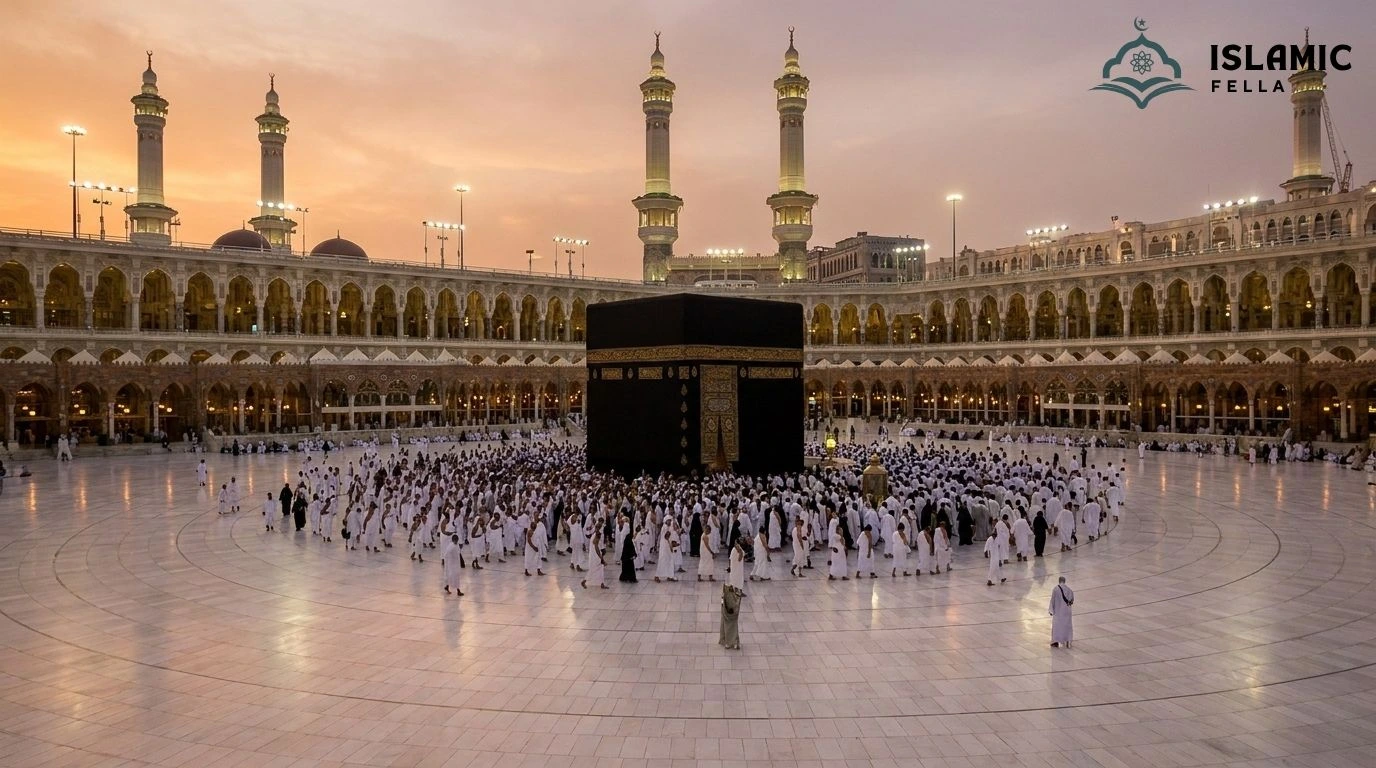
After years of conflict and agreements, the Prophet (P.B.U.H) and a large Muslim force entered Makkah in 630 CE. The city came under Muslim control. The idols around the Ka‘bah were removed, and the sanctuary was dedicated again to the worship of Allah alone.
The return to Makkah is remembered in the Islamic tradition not only as a political victory but also as a moment in which the Prophet (P.B.U.H) showed restraint toward many former enemies. His message had grown from a small group of believers in Makkah into a large community across much of Arabia.
The Farewell Hajj and His Death
In 632 CE, the Prophet Muhammad (P.B.U.H) performed what became known as his Farewell Hajj. During this final pilgrimage, he taught the Muslim community about sacred rights, responsibility, justice, and holding firmly to the guidance Allah had given them.
A few months later, the Prophet (P.B.U.H) became ill and died in Madinah in 632 CE. He was buried there. His death was a painful shock to the Muslim community, but Muslims understood that worship was never directed to Muhammad (P.B.U.H). Allah is eternal, while prophets are human messengers who live and die.
Why Muslims Follow His Sunnah
The Qur’an tells believers that the Messenger of Allah is an excellent example for those who hope in Allah and the Last Day. For this reason, Muslims study how the Prophet (P.B.U.H) prayed, treated family members, dealt with neighbors, gave charity, forgave people, made decisions, and worshipped Allah.
Reports about his words and actions are called hadith. Muslim scholars developed sciences for checking the chains of narrators and the text of reports so they could separate strong reports from weak or invented ones. This is important because not every story shared online or in a speech about the Prophet (P.B.U.H) is automatically authentic.
His Message in One Sentence
The central message of Prophet Muhammad (P.B.U.H) was not “worship me.” It was the opposite: worship Allah alone. He taught that human beings are responsible before their Creator and should live with faith, prayer, honesty, mercy, justice, and good character.
To understand Islam, it is important to understand Muhammad (P.B.U.H) as Muslims understand him: a human being, a servant of Allah, the final prophet, the receiver of the Qur’an, and a practical example of living by its guidance.
Muslims also show respect when his name is mentioned by saying “peace and blessings be upon him.” The small (P.B.U.H) symbol commonly seen after his name carries this meaning in Arabic. This practice comes from the Qur’anic command for believers to send blessings and peace upon the Prophet. It is a sign of respect and love, not an act of worship.